Jambalaya's Global Roots: A Culinary Journey Through Louisiana
Louisiana's culinary landscape is a vibrant tapestry woven from countless threads of global influence, and perhaps no dish embodies this rich cultural synthesis more perfectly than
jambalaya. More than just a meal, jambalaya is a single-pot testament to the historical ebb and flow of peoples, traditions, and flavors that converged in the bayous and bustling cities of the Pelican State. From its humble beginnings to its status as a celebrated festival staple, jambalaya invites us on a delicious journey through time and across continents.
The Melting Pot in a Pot: Jambalaya's Rich Heritage
The genesis of jambalaya can be traced back to 18th-century Louisiana, where a remarkable culinary alchemy began. This iconic dish didn't spring from a vacuum; rather, it evolved as a clever adaptation and innovative fusion of diverse global foodways. At its heart, jambalaya carries the echo of Spanish paella. Spanish settlers, accustomed to their saffron-infused rice dishes, found themselves in a new world where saffron was a rare and costly commodity. Ingeniously, they began substituting local ingredients, laying the groundwork for a distinct Louisiana rice dish.
Simultaneously, French culinary techniques, brought by colonists and later by Acadian exiles, contributed sophisticated methods of sautéing and building flavor. The influence of West African rice-cooking methods, possibly akin to jollof rice, cannot be overstated, introduced by enslaved people who brought invaluable agricultural knowledge and cooking traditions. These techniques, often centered around cooking rice in a single pot with proteins and vegetables, naturally integrated into the developing Louisiana cuisine. Local Native American ingredients and German influences further seasoned this evolving culinary identity, creating a truly unique and complex flavor profile that distinguishes jambalaya.
This unparalleled blend of cultures, all simmering together in Louisiana's unique colonial melting pot, gave birth to a dish that transcended its individual components. It appeared in print as early as 1878 in the
Gulf City Cook Book under the name "Jam Bolaya," featuring chicken and oysters, solidifying its place in written culinary history.
A Tale of Two Jambalayas: Creole vs. Cajun
While the core concept of a seasoned rice dish cooked with proteins in a single pot remains, Louisiana proudly presents two distinct styles of jambalaya, each reflecting its specific geographic and cultural origins: Creole and Cajun. Understanding the difference is key to appreciating the depth of this versatile dish.
*
Creole Jambalaya: The Urban Red Pot
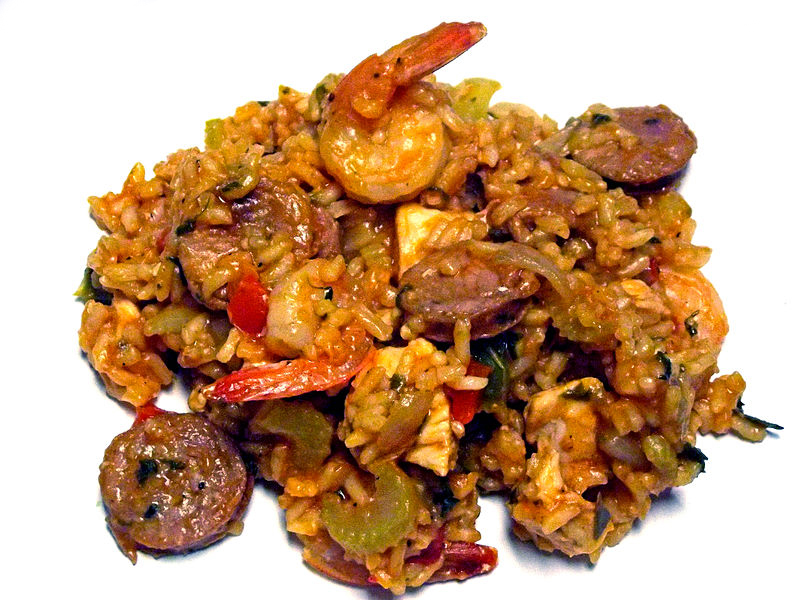
Associated with the cosmopolitan heart of New Orleans and its diverse Creole population, Creole jambalaya is often recognized by its characteristic red hue. This color comes from the incorporation of tomatoes, either fresh, diced, or canned. Creole jambalaya typically features a milder, more herbaceous flavor profile, often seasoned with oregano, basil, and a blend of other savory spices, reflecting the culinary traditions of a port city with access to a wider array of ingredients and influences. Proteins commonly include chicken, shrimp, and various sausages.
*
Cajun Jambalaya: The Rural Brown Pot
Hailing from the rural, bayou country of Acadiana, Cajun jambalaya takes a different path. It famously omits tomatoes, opting instead for a rich, smoky depth achieved through the creation of a dark roux—a mixture of flour and fat cooked until it reaches a deep brown color. This provides a robust, nutty base that distinguishes Cajun jambalaya. Emphasizing bold spices like cayenne and black pepper, and often incorporating smoked meats, pork, or game meats indigenous to the region, Cajun jambalaya delivers a more assertive, spicier kick.
Both styles are beloved, offering unique experiences. To delve deeper into these fascinating distinctions, explore our detailed comparison in
Cajun vs. Creole Jambalaya: Decoding Louisiana's Flavorful Divide.
Decoding the Name: What Does "Jambalaya" Mean?
The intriguing name "jambalaya" itself offers a linguistic journey that mirrors the dish's culinary evolution. The most well-supported theory traces its origin to the Provençal French dialect word
jambalaia (or its variant
jambaraia), which literally means a "mishmash," "jumble," or "rabble." This perfectly encapsulates the dish's character as a medley of diverse ingredients cooked together in a single pot. This derivation aligns with southern French culinary traditions of mixed rice dishes that predate the term's appearance in English-language records from 1849, when it first described a preparation involving chicken and rice akin to contemporary versions. Provençal influences arrived in Louisiana via French settlers from regions like Languedoc, leading to the term's phonetic adaptation in the colonial melting pot.
While other theories have surfaced, they are largely considered folk etymologies. Claims linking "jambalaya" to a Creole fusion of French
jambon ("ham") with West African words for rice such such as
ya or
aya (from languages like Wolof) are linguistically untenable. They require strained phonetic contortions and ignore the chronological precedence of the Provençal form. Similarly, unsubstantiated claims connecting it to Native American Atakapa phrases or unrelated Arabic terms lack historical attestation in pre-19th-century sources. The true etymology, rooted in the idea of a delightful "mishmash," truly captures the spirit of this culturally rich dish.
Beyond the Basics: Crafting Your Own Jambalaya
At its core,
jambalaya is a single-pot meal designed for both flavor and efficiency. The foundation of nearly all jambalaya recipes is the "Holy Trinity" of diced onion, celery, and bell pepper, sautéed until fragrant, forming the aromatic backbone of the dish. To this, garlic is invariably added, followed by a medley of proteins and rice, all simmered in stock with a blend of seasonings.
Common proteins include hearty andouille sausage, tender chicken (often thighs or breasts), and succulent shrimp. The beauty of jambalaya, however, lies in its remarkable versatility. Home cooks often customize their pots with what's available and what's preferred. Feel free to incorporate crawfish for a distinct Louisiana touch, add sliced okra for extra body and flavor, or even throw in some carrots for sweetness and color. Seasonings typically include cayenne pepper for heat, thyme for an earthy note, and often bay leaves, black pepper, and other regional spice blends.
Achieving the perfect jambalaya involves more than just mixing ingredients; it's about layering flavors. Browning your meats properly, allowing the Holy Trinity to fully soften, and deglazing the pot to capture all those flavorful bits are crucial steps. The rice then absorbs all these rich flavors, cooking to tender perfection without becoming mushy. For comprehensive guidance on mastering this beloved dish and personalizing it to your taste, be sure to check out
Mastering Jambalaya: Tips for Authentic Flavor & Customization.
Jambalaya's Enduring Legacy: From Home Kitchens to Festivals
Jambalaya has transcended its origins as a resourceful home-cooked meal to become a celebrated symbol of Louisiana's vibrant culture. It's a dish intrinsically linked to gatherings, whether a casual family dinner or a grand community celebration. Its ability to feed a crowd from a single pot makes it a natural fit for festivals and events.
Perhaps the most famous testament to its popularity is the annual Gonzales Jambalaya Festival, established in 1968. Held in Gonzales, Louisiana – officially dubbed the "Jambalaya Capital of the World" – this festival draws thousands each year to celebrate the dish, compete in cooking contests, and enjoy the communal spirit it embodies. Beyond local festivals, jambalaya has even permeated popular culture, most notably through Hank Williams' iconic 1952 song "Jambalaya (On the Bayou)," which further cemented its place in the American consciousness. This song introduced the dish, and a romanticized vision of Louisiana bayou life, to a national and international audience, making "jambalaya" a household name far beyond its regional birthplace.
Conclusion
Jambalaya is far more than just a rice dish; it is a delicious chronicle of Louisiana's rich history, a culinary mosaic born from diverse global influences. From its Spanish paella roots and French techniques to West African rice traditions and local adaptations, this single-pot wonder beautifully mirrors the complex cultural synthesis of its homeland. Whether you prefer the tomato-infused urban Creole style or the smoky, roux-based rural Cajun version, jambalaya offers a hearty, flavorful experience that truly captures the spirit of Louisiana. Its enduring legacy, from family dinner tables to grand festivals, ensures that this iconic dish will continue to delight palates and tell stories for generations to come. So next time you savor a spoonful, remember the incredible culinary journey it represents.